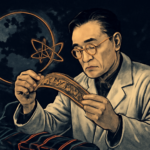
China origin-probing satellite program is the new flagship initiative that aims to search for the origins of life, the universe, and space weather.
Key Points
- Origin‑probing program: A coordinated space‑science initiative led by Chinese Academy of Sciences (Zhongguo Kexueyuan 中国科学院) and Guojia Kongjian Kexue Zhongxin 国家空间科学中心, launching multiple missions during the 15th Five‑Year Plan (e.g., Hongmeng Plan (鸿蒙计划), Kuafu‑2 (夸父二号), 系外地球巡天, and an enhanced X‑ray observatory).
- High‑impact discoveries: Missions like Tianguan (天关) and Huiyan (慧眼号) found new X‑ray transients (e.g., EP241021a) and mapped accretion and burst physics; Wukong (悟空号) measured boron cosmic‑ray spectra ≥1 TeV/n and reported a spectral hardening at 8σ.
- Surprising space‑weather result: Kuafu‑1 (夸父一号) studied 127 high‑energy C‑class flares and found only 5 associated CMEs (all narrow jet‑type), challenging conventional flare/CME models.
- Technology and market impact: Breakthroughs in lobster‑eye X‑ray telescopes (1–2 orders of magnitude performance gains), an international X‑ray calibration beamline, and advances in star‑to‑ground optical alignment support a push for technological self‑reliance and commercial opportunities in optics, detectors, and payload integration.

Overview — origin‑probing satellite program explained
At a briefing held on November 24, 2025, China’s National Space Science Center (Guojia Kongjian Kexue Zhongxin 国家空间科学中心) announced a coordinated program of space science satellites focused on probing origins.
The program is organized by the Chinese Academy of Sciences (Zhongguo Kexueyuan 中国科学院).
It combines missions aimed at the origins of the universe, space weather, and life.
The multi‑mission plan will be carried out during the 15th Five‑Year Plan period.
Named projects include the Hongmeng Plan (Hongmeng jihua 鸿蒙计划), Kuafu‑2 (Kuafu erhao 夸父二号), an exoplanet Earth survey (系外地球巡天), and an enhanced X‑ray time‑domain and polarization space observatory.
The program targets breakthroughs in areas such as the cosmic “dark age”, the solar magnetic activity cycle, and the detection of Earth‑like exoplanets.

Find Top Talent on China's Leading Networks
- Post Across China's Job Sites from $299 / role
- Qualified Applicant Bundles
- One Central Candidate Hub
Your First Job Post Use Checkout Code 'Fresh20'

Why this program matters — strategic, scientific, and market implications
The plan is designed to push China’s space science from “parallel” to “leading” across multiple disciplines.
It pairs ambitious science goals with advanced payload and platform technologies.
That mix is framed as a strategic contribution to technological self‑reliance and national capabilities in space science, technology, and applications.
For investors, founders, and tech teams this means:
- More domestic demand for specialized components, sensors, and payload integration services.
- Opportunity for partnerships in international science teams and data‑sharing collaborations.
- Signals to supply chain players about prioritized technologies: X‑ray optics, wide‑field detectors, star‑to‑ground optical alignment, and integrated platform–payload designs.

ExpatInvest China
Grow Your RMB in China:
- Invest Your RMB Locally
- Buy & Sell Online in CN¥
- No Lock-In Periods
- English Service & Data
- Start with Only ¥1,000
Main scientific goals — what the missions will target
- Study cosmic origins including the Universe’s earliest phases and transient celestial phenomena.
- Advance understanding of space weather and solar eruptive processes that create high‑energy particles.
- Search for signs and conditions relevant to the origin of life, including targeted surveys of exoplanets and their environments.
- Develop advanced X‑ray time‑domain and polarization observations to probe compact objects, black holes, neutron stars, and gamma‑ray bursts.

Resume Captain
Your AI Career Toolkit:
- AI Resume Optimization
- Custom Cover Letters
- LinkedIn Profile Boost
- Interview Question Prep
- Salary Negotiation Agent
Key missions named in the program — mission list and focus keywords
- Hongmeng Plan (Hongmeng jihua 鸿蒙计划) — origins of the universe and dark‑age studies.
- Kuafu‑2 (Kuafu erhao 夸父二号) — space weather and solar particle environment.
- An exoplanet Earth survey (系外地球巡天) — targeted detection of Earth‑like exoplanets.
- Enhanced X‑ray time‑domain and polarization space observatory — time‑domain astrophysics and polarization science.
Progress and scientific achievements so far (2011–2025)
The announcement reviewed results from the Space Science Pioneer Special Project (空间科学先导专项), launched in 2011.
That project developed and flew eight scientific satellites and produced multiple world‑first and China‑first results.
Satellites launched and highlighted include:
- Wukong (Wukong 悟空号)
- Shijian‑10 (Shijian shihao 实践十号)
- Mozi (Mozi 墨子号)
- Huiyan / Insight (Huiyan 慧眼号) — X‑ray telescope mission
- Taiji‑1 (Taiji yihao 太极一号)
- Huairou‑1 (Huairou yihao 怀柔一号)
- Kuafu‑1 (Kuafu yihao 夸父一号)
- Tianguan (Tianguan 天关)
Major scientific highlights reported — discoveries and why they matter
1) New kinds of X‑ray transients
The Tianguan (Tianguan 天关) satellite discovered a new type of X‑ray transient, labeled EP241021a, offering clues to the nature of these transient objects.
Tianguan also detected an X‑ray faint outburst inside the Milky Way (EP240904a) that could be a new way to discover stellar‑mass black holes.
A third transient (EP240801a), found after Tianguan’s autonomous trigger and automatic follow‑up, challenges traditional gamma‑ray burst classification schemes.
2) Advances from Huiyan (Insight‑HXMT) and other X‑ray observatories
The Huiyan (Huiyan 慧眼号) satellite delivered results across multiple areas.
These include precise measurements of atmospheric density in Earth’s upper atmosphere, mechanisms of accretion outbursts from galactic black holes, and emission and surface magnetic field properties of accreting millisecond pulsars.
Huiyan also mapped ignition sites for thermonuclear burning on neutron star surfaces and measured the minimum variability timescales of the brightest gamma‑ray bursts.
3) New subtypes and behaviors in transient high‑energy phenomena
Huairou‑1 (Huairou yihao 怀柔一号) identified a new subtype of gamma‑ray burst produced by compact star mergers, expanding understanding of electromagnetic counterparts to gravitational‑wave events.
It revealed a previously unrecognized magnetic propeller eruption mode.
It also discovered periodic particle‑precipitation events that deepen knowledge of the near‑Earth radiation environment.
4) First detection of spectral hardening in secondary cosmic‑ray boron
Wukong (Wukong 悟空号) measured the boron (B) cosmic‑ray energy spectrum above 1 TeV per nucleon (≥1 TeV/n) with world‑leading precision.
The mission reported a hardening (spectral break) in boron with a significance of 8σ (eight times the standard deviation).
The change in the boron spectral index is about twice the magnitude of the index change seen in primary cosmic rays such as protons and helium.
That suggests the observed hardening may originate from propagation effects in the Galaxy rather than source spectra alone, a result with major implications for cosmic‑ray propagation models.
5) Unexpected association rate between high‑energy C‑class solar flares and CMEs
Kuafu‑1 (Kuafu yihao 夸父一号) observations showed a much lower association rate between high‑energy C‑class solar flares and coronal mass ejections (CMEs) than expected.
In a study of 127 high‑energy C‑class flares, only 5 were accompanied by CMEs, and all five CMEs were narrow jet‑type events.
This lower‑than‑expected association rate challenges conventional models of solar eruptive processes and the origin of high‑energy solar particles.
It points to new directions in solar flare/CME research and space weather forecasting methods.
Technological and organizational advances — how China built capability
Technical breakthroughs and engineering steps underpinned the scientific progress.
- Breakthroughs in star‑to‑ground optical path alignment and other key satellite technologies.
- Construction of China’s first internationally competitive X‑ray calibration beamline.
- Development of lobster‑eye (wide‑field) X‑ray telescopes with sensitivity and field‑of‑view performance 1–2 orders of magnitude ahead of earlier instruments.
- Integrated design of satellites combining platform and payload for improved performance.
Organizationally, a “chief scientist + two chief engineers” governance model was established.
That model cultivated top‑level talent, interdisciplinary teams, and a pipeline of young scientific leaders.
Focused laboratory and infrastructure investments strengthened China’s domestic capacity for future missions.
International cooperation — science without borders
The program pursued extensive international collaboration.
Examples include the “Smile” satellite, a mission with the European Space Agency (ESA) that represents deep, full‑life‑cycle cooperation.
Tianguan (Tianguan 天关) included participation from ESA, Germany, and France.
Collaborations involved jointly formed international science teams and data‑sharing arrangements, increasing global scientific impact.
Outlook — what this means for researchers, startups, and investors
With the new origin‑probing satellite plan, Chinese space science aims to continue producing original discoveries and move from following to leading in specialized areas.
The roadmap combines bold scientific objectives with proven technical advancements and an expanding international footprint.
That positions the program to contribute significant new knowledge on cosmic origins, space weather, and conditions related to the origin of life.
For investors and founders this signals growth areas in advanced optics, detector fabrication, payload integration, ground segment software, and international data services.
For technologists and researchers, it signals continued opportunities for archived and real‑time data access, cross‑disciplinary work, and new discovery spaces in time‑domain astrophysics, exoplanet surveys, and heliophysics.
For marketers and communicators, the program offers a steady stream of headline discoveries, international collaborations, and mission milestones to build narratives around.
Key takeaway: This origin‑probing satellite program is a strategic, science‑driven push that will expand China’s role in space science and create concrete opportunities across technology, research, and markets.
China origin-probing satellite program is set to reshape several global research frontiers and the commercial ecosystem that supports them.