Key Points
- “Computing-Electricity Coordination” (Suan Dian Xie Tong 算电协同) has been included in China’s Government Work Report for the first time, signaling its status as a formal national strategic infrastructure project for powering AI ambitions.
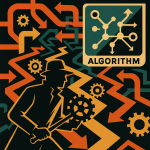
- This strategy aims for the dynamic matching and optimal allocation of computing and power resources through intelligent scheduling, integrating computing infrastructure with the power system via digital technology and AI algorithms.
- China’s data center electricity consumption grew from 82.4 billion kWh to 166 billion kWh between 2019 and 2024 (a 15% CAGR), with projections showing annual consumption between 390.7 billion kWh and 820.6 billion kWh by 2030, underscoring the urgent need for this coordination.
- A significant trend reveals that Chinese AI models dominate global usage, accounting for 61% (5.3 trillion out of 8.7 trillion tokens) on platforms like OpenRouter, effectively making China an “energy exporter” through its computing power.
- The core mechanism involves using “direct green power connections and intelligent microgrids” to guide computing loads to match volatile renewable energy production, ensuring stable energy supply and accelerating the green energy transition.

Computing-Electricity Coordination (Suan Dian Xie Tong 算电协同) just hit a major milestone.
For the first time ever, this concept made it into China’s official Government Work Report.
This isn’t just bureaucratic language—it signals a fundamental shift in how China plans to power its AI ambitions.
—
What Just Happened: The Official Policy Shift
- December 2023: First introduction of the concept in “East Data, West Computing” implementation opinions.
- July 2024: Inclusion in “Action Plan for Green and Low-Carbon Development of Data Centers.”
- March 2025: Formal inclusion in the national Government Work Report as strategic infrastructure.
On March 5, China’s Government Work Report proposed to “implement new infrastructure projects such as ultra-large-scale intelligent computing clusters and computing-electricity coordination, strengthen national integrated computing power monitoring and scheduling, and support the development of public clouds.”
Translation?
Computing-Electricity Coordination went from local experiments and departmental initiatives to formal national strategic deployment.
It’s now officially classified as a critical new infrastructure project—the same status as railroads and highways decades ago.
Chen Changsheng (陈昌盛), Deputy Director of the Research Office of the State Council and member of the Government Work Report drafting group, made the strategic imperative crystal clear at an Information Office briefing on March 5:
“To build a solid foundation for AI development, we must first secure the infrastructure base. There is a saying online that ‘the end of AI is energy.’ We must leverage the strengths of the State Grid system to further implement the construction of ultra-large-scale intelligent computing clusters and new infrastructure like computing-electricity coordination.”
He emphasized the need to support the enhancement of Large Language Model (LLM) and computing capabilities, deploying embodied intelligence and world models through multiple paths.
—

Find Top Talent on China's Leading Networks
- Post Across China's Job Sites from $299 / role
- Qualified Applicant Bundles
- One Central Candidate Hub
Your First Job Post Use Checkout Code 'Fresh20'

Breaking Down Computing-Electricity Coordination
Let’s get specific about what this actually means.
Computing-Electricity Coordination refers to the organic integration of computing power infrastructure with the power system via:
- Digital technology
- Intelligent algorithms
- Communication networks
The goal?
Dynamic matching and optimal allocation of computing and power resources through intelligent scheduling.
In practice, this means:
- Promoting coordination in resource management
- Improving demand response efficiency
- Enhancing overall energy efficiency
- Ensuring stable supply chains
- Driving low-carbon development
Think of it as an AI-powered matchmaking system between computing demand and energy supply.
—

ExpatInvest China
Grow Your RMB in China:
- Invest Your RMB Locally
- Buy & Sell Online in CN¥
- No Lock-In Periods
- English Service & Data
- Start with Only ¥1,000
Why This Matters: The Energy Reality Check
Here’s the uncomfortable truth about AI infrastructure: it consumes massive amounts of electricity.
Data centers aren’t just high-tech spaces—they’re high-energy-consuming loads that can strain national power grids.
The Numbers Are Staggering
According to data from the China Academy of Information and Communications Technology (Zhongguo Xin Tong Yuan 中国信通院):
- From 2019 to 2024, electricity consumption by Chinese data centers grew from 82.4 billion kWh to 166 billion kWh
- This represents a compound annual growth rate of 15%
- The trajectory is only accelerating as AI workloads increase
But there’s another layer to this story.
China’s “Computation Export” Is Actually an Energy Export
A fascinating trend is emerging: Chinese AI models are dominating global usage.
Data from OpenRouter, the world’s largest AI model API aggregation platform, tells the story:
- From February 16 to February 22, the platform’s top ten models consumed approximately 8.7 trillion tokens
- Chinese models accounted for 5.3 trillion tokens, or 61% of the total
What does this mean economically?
Behind the export of computing power is, in essence, the export of electricity.
Every token processed, every inference run—it’s all powered by Chinese electrical infrastructure.
—

Resume Captain
Your AI Career Toolkit:
- AI Resume Optimization
- Custom Cover Letters
- LinkedIn Profile Boost
- Interview Question Prep
- Salary Negotiation Agent
The Projection: Where Computing Power Demand Is Heading
According to IDC forecasts, the growth trajectory is aggressive:
- China’s intelligent computing power will grow from 1,037.3 EFLOPS to 2,781.9 EFLOPS between 2025 and 2028
- This represents an average annual growth rate of 38.9%
But here’s where it gets interesting—the variance in scenarios:
Assuming different annual growth rates, by 2030, China’s intelligent computing power could reach:
- 3,166 EFLOPS at 25% annual growth
- 4,651 EFLOPS at 35% annual growth
- 6,649 EFLOPS at 45% annual growth
This computing growth translates directly to energy consumption:
- 390.7 billion kWh annually (at 25% growth)
- 574.1 billion kWh annually (at 35% growth)
- 820.6 billion kWh annually (at 45% growth)
To put this in perspective: at the highest scenario, annual data center electricity consumption alone would nearly match the total electricity generation of entire nations.
This is why Computing-Electricity Coordination isn’t optional—it’s essential.
—
How China Got Here: The Policy Timeline
This didn’t happen overnight.
The policy infrastructure has been building:
- December 2023: The “Implementation Opinions on Deeply Implementing the ‘East Data, West Computing’ Project and Speeding Up the Construction of a National Integrated Computing Power Network” first introduced computing-electricity coordination
- July 2024: Both the “Action Plan for Green and Low-Carbon Development of Data Centers” and the “Action Plan for Accelerating the Construction of a New Power System (2024-2027)” proposed specific measures to promote this synergy
- March 2025: Official inclusion in the Government Work Report signals national strategic priority
Last May, the National Development and Reform Commission (Guojia Fazhan He Gaige Weiyuanhui 国家发展和改革委员会) and the National Energy Administration (Guojia Nengyuan Ju 国家能源局) jointly issued a notice on orderly development of direct green power connections.
Latest data shows:
- 84 direct green power connection projects have been approved nationwide
- Total installed capacity of 32.59 million kilowatts
- These projects cover downstream applications including data center power supplies
—
The Core Strategy: Green Power Meets Smart Scheduling
Guosheng Securities (Guosheng Zhengquan 国盛证券) breaks down the fundamental mechanism:
The core of computing-electricity coordination lies in using “direct green power connections and intelligent microgrids” to guide computing loads to match renewable energy production more accurately.
In other words:
- Computing demand (a high-quality new form of power consumption) gets intelligently directed
- It matches the production of volatile renewable energy in both time and space
- This ensures stable energy supply while accelerating the green energy transition
It’s elegant infrastructure design: make the computing flexible enough to dance with renewable energy availability rather than forcing energy infrastructure to perfectly match computing demand.
—
Which Companies Are Actually Building This?
This isn’t theoretical—capital is flowing into the space right now.
According to incomplete data from Securities Times (Zhengquan Shibao 证券时报) and Databao (Shuju Bao 数据宝), over 20 companies across multiple sectors have clarified their involvement in computing-electricity coordination.
These span:
- Power operators
- Data center service providers
- Power equipment enterprises
Key Players in the Space
Kehua Data (Kehua Shuju 科华数据)
Stated in its 2025 semi-annual report that the coordination between “intelligent computing centers” and “new energy” has become a core competitiveness factor.
Tonli (Tongli Tianqi 同力天启)
Signed a strategic agreement with the Qingyang (庆阳) government in March 2025 to:
- Build a 2GWh energy storage equipment production line
- Explore intelligent scheduling capabilities
Huazi Technology (Huazi Keji 华自科技)
Focusing on:
- National computing hub nodes
- Expanding green power markets relying on source-grid-load-storage integration
Zhongheng Electric (Zhongheng Dianqi 中恒电气)
Developing third-generation High Voltage Direct Current (HVDC) products to match the high-power density requirements of intelligent computing cabinets.
China Energy Engineering Corp (Zhongguo Nengjian 中国能建)
Providing low-cost green power to data centers through a comprehensive model:
- Green power direct supply
- Smart grid integration
- Computing-electricity coordination
Jinkai New Energy (Jinkai Xinneng 金开新能)
Investing in the Changji (昌吉) 5,000P intelligent computing center in Xinjiang.
Henan Yuneng Holdings (Yuneng Konggu 豫能控股)
Planning to acquire a controlling stake in Zhengzhou Heying Data (郑州合盈数据).
—
What This Means for Investors and Builders
Computing-Electricity Coordination represents a fundamental infrastructure layer between AI ambitions and physical reality.
You can’t scale AI without solving the energy puzzle—and China just made it official policy to do so.
For investors:
- This signals long-term capital allocation toward energy infrastructure that supports AI
- The companies listed above are early movers in a sector that will likely see accelerating investment
- Multiple technology vectors (smart grids, HVDC, energy storage, software scheduling) all have growth pathways
For builders:
- There’s a critical infrastructure gap between computing demand and green energy supply
- Software, hardware, and operational solutions that bridge this gap have clear market demand
- Government backing means regulatory support and likely customer mandates from state-owned enterprises
The narrative is clear: the future of AI infrastructure in China isn’t just about computing power—it’s about computing power that’s intelligent, sustainable, and coordinated with energy systems.
Computing-Electricity Coordination is now national policy, and the capital is following.
—

References
- AI Computing Power Matters! This New Infrastructure Initiative Included in Government Work Report for the First Time – Securities Times
- Full Text: 2024 Government Work Report – State Council of the People’s Republic of China
- Energy Consumption and Digital Economy Statistics – National Bureau of Statistics of China
- White Paper on China’s Computing Power Development – China Academy of Information and Communications Technology