Key Points
- China’s nuclear power sector is projected to have the world’s largest operational capacity by 2030 and aims for an annual output value exceeding ¥400 billion RMB ($55.12 billion USD) by 2026 from nuclear technology applications.
- Breakthroughs like the Firmsys (Hemu 和睦) nuclear-safety-grade digital control platform are ending China’s reliance on foreign technology, saving over ¥10 billion RMB ($1.38 billion USD) in cumulative costs.
- Domestic production of medical isotopes, led by Qinshan Nuclear Power (Qinshan Hedian 秦山核电), has ended import dependency, powering a regional industry with an estimated annual output value over ¥25 billion RMB ($3.44 billion USD).
- The “Hualong One” (Hualong Yihao 华龙一号) reactor technology boasts over 700 invention patents and achieved 100% localization of equipment in overseas demonstration projects, highlighting China’s “hard-core” manufacturing strength.
- China is expanding nuclear energy applications beyond electricity, including industrial heat supply (the Tianwan model can replace 400,000 tons of coal annually), nuclear medicine, and agricultural breeding.
- Nuclear medicine and diagnostics
- Agricultural breeding and food security
- Industrial heat and steam supply
- Medical device development
- Pharmaceutical research

Nuclear energy is having a major moment in China.
Against the backdrop of the global energy transition and the rapid development of the computing power industry, nuclear energy has become a central force in upgrading China’s energy structure.
The numbers tell the story:
- Zero-carbon, clean, stable, and highly efficient – these are the core advantages that make nuclear a vital pillar for national energy security
- According to the “China Nuclear Energy Development Report (2026)” blue paper, China’s operational nuclear power capacity is expected to rank first in the world by 2030
- The nuclear technology application industry is targeting an annual output value exceeding ¥400 billion RMB ($55.12 billion USD) by 2026
What’s driving this explosion?
The Yangtze River Delta computing power hub is booming, and it needs massive amounts of stable, clean electricity.
Nuclear energy is the perfect match.

Find Top Talent on China's Leading Networks
- Post Across China's Job Sites from $299 / role
- Qualified Applicant Bundles
- One Central Candidate Hub
Your First Job Post Use Checkout Code 'Fresh20'
Breaking Foreign Monopolies: How China’s Domestic Tech is Winning
Here’s where it gets interesting.
The real story isn’t just about building more nuclear plants – it’s about ending China’s dependence on foreign technology.
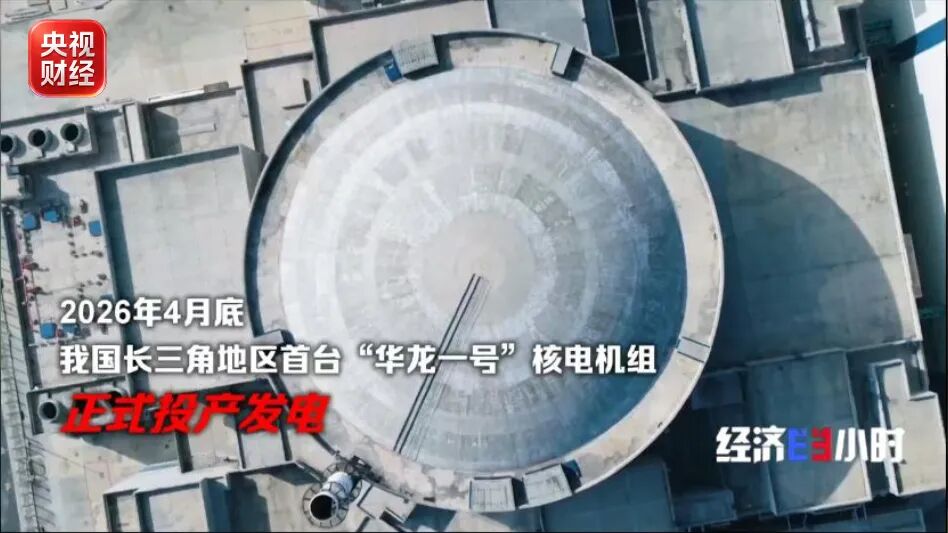
At the San’ao Nuclear Power Base (San’ao Hedian Jidi 三澳核电基地) in the Yangtze River Delta, the “Hualong One” (Hualong Yihao 华龙一号) units have officially gone into operation.
Once all six planned units are fully operational, here’s what you’re looking at:
- Annual power generation exceeding 54 billion kWh
- Enough electricity to power millions of homes and data centers
- A fully domestically developed nuclear safety system
The breakthrough?
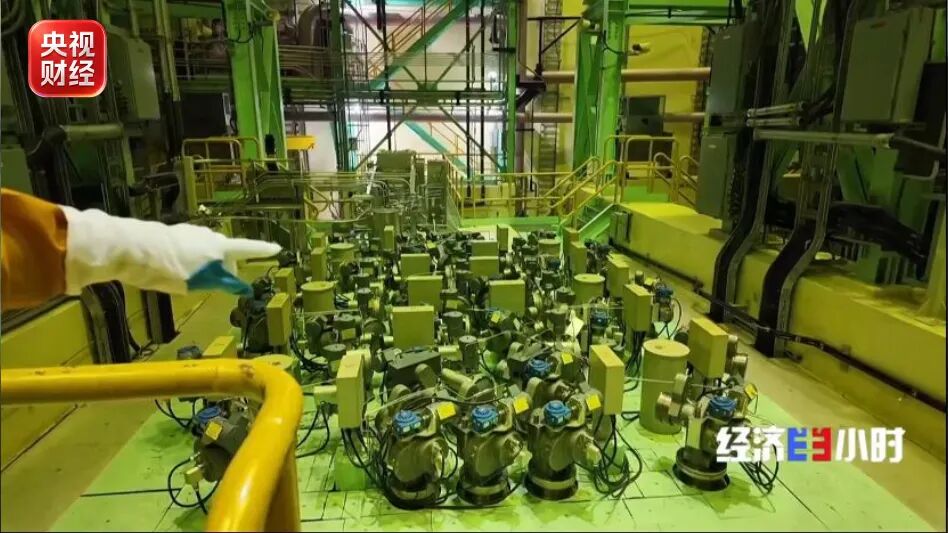
The Firmsys (Hemu 和睦) nuclear-safety-grade digital control platform – this is the technology that breaks foreign monopolies.
Here’s what makes it special:
- Compatible with various mainstream reactor types – not locked into one specific design
- Uses massive algorithms for intelligent management – AI-driven equipment control and optimization
- Saved the country over ¥10 billion RMB ($1.38 billion USD) in cumulative costs – that’s real money staying in China
Think about that figure for a second.
By developing domestic alternatives to foreign nuclear control systems, China isn’t just reducing costs – it’s building energy independence.
The Tech Stack Behind the Scenes
San’ao is doing more than just replacing old systems.
The project has introduced:
- Intelligent inspection robots (Jiqiren 机器人) – combining the Internet of Things (Wulianwang 物联网) and AI technology
- Transparent safety management – significantly improving inspection efficiency
- Private capital integration – nearly 2,000 private enterprises participating in nuclear power construction
This isn’t your grandfather’s nuclear power plant.
It’s a hybrid model mixing state-backed infrastructure with private sector innovation.

ExpatInvest China
Grow Your RMB in China:
- Invest Your RMB Locally
- Buy & Sell Online in CN¥
- No Lock-In Periods
- English Service & Data
- Start with Only ¥1,000

Resume Captain
Your AI Career Toolkit:
- AI Resume Optimization
- Custom Cover Letters
- LinkedIn Profile Boost
- Interview Question Prep
- Salary Negotiation Agent

The Ripple Effect: Medical Isotopes and Beyond
Here’s where nuclear energy gets interesting for investors and founders – the spillover benefits.
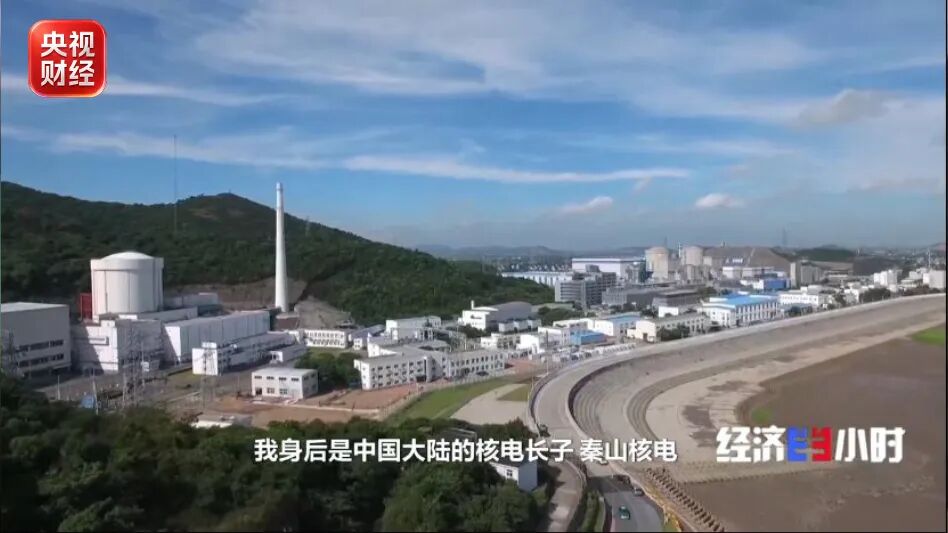
Qinshan Nuclear Power (Qinshan Hedian 秦山核电), China’s first nuclear power plant, operates nine units with an annual power generation of 53 billion kWh.
That’s enough to meet the electricity needs of more than 8 million people.
But the real story is what’s happening downstream.
Breaking Import Dependency in Medical Isotopes
Senior O&M expert He Shaohua (何少华) led a team to overcome the challenges of underwater core operations.
The result?
Domestic medical isotope mass production – completely ending reliance on imports.
This matters because medical isotopes aren’t just nice-to-have.
They power:
- Medical imaging and diagnostics
- Cancer treatment and radiation therapy
- Research and development of domestic medical equipment (Yiliao Shebei 医疗设备)
- Targeted drug development
The economic impact?
Related nuclide products and services are driving regional industrial development with an estimated annual output value exceeding ¥25 billion RMB ($3.44 billion USD).
That’s a multi-billion dollar ecosystem being built from nuclear infrastructure.
Training the Next Generation (The “Gold Men”)
Here’s a challenge most people overlook: nuclear power operations require elite talent.
The threshold for training nuclear power operation and maintenance (O&M) personnel is extremely high:
- Long training cycles for industry experts
- High elimination rates – not everyone makes the cut
- These are the industry’s “Gold Men” (Huangjinren 黄金人)
This creates both a bottleneck and an opportunity – skilled nuclear personnel command premium compensation and long-term job security.
Global Leadership: Why China’s Nuclear Tech Matters Worldwide
Here’s the thing that separates China’s nuclear ambitions from past efforts:
The “Hualong One” carries the history of China’s struggle for nuclear power autonomy.
This wasn’t built overnight.
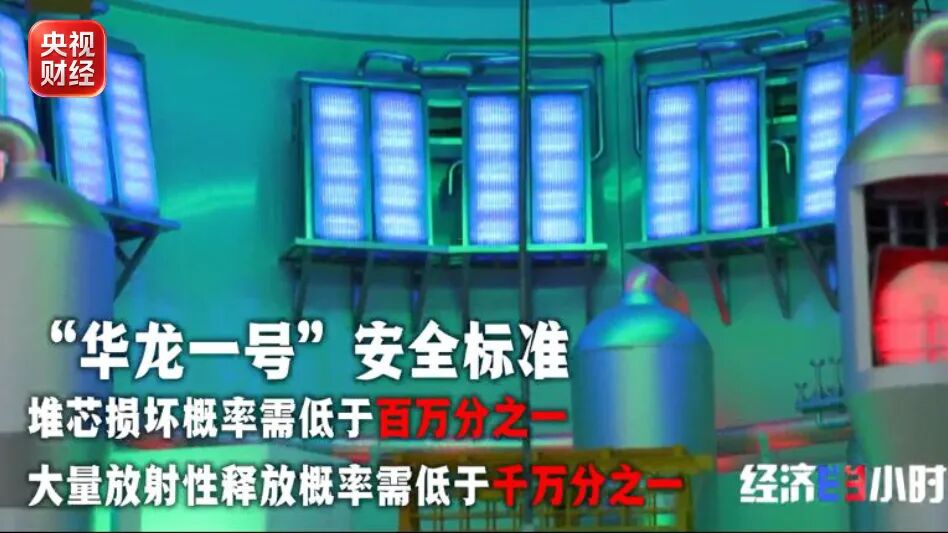
The team actively upgraded safety standards and tackled core technologies, resulting in:
- More than 700 invention patents won
- A complete independent Intellectual Property (Zhishi Chanquan 知识产权) system
- Safety standards ranking among the highest internationally
What’s particularly impressive?
The overseas demonstration projects have achieved 100% localization of equipment – meaning China isn’t just building for itself, it’s building exportable technology.
This is the “hard-core” strength of China’s equipment manufacturing, and it’s being led by China National Nuclear Corporation (Zhongguo Hedian 中国核电).
Energy Efficiency: The Tianwan Model
The Tianwan Nuclear Power Plant (Tianwan Hedian Zhan 田湾核电站) is pioneering something different – a nuclear energy industrial steam supply project.
What does this mean in practical terms?
- Can replace 400,000 tons of standard coal annually
- Reduces carbon dioxide emissions by 1.07 million tons
- Significantly improves energy utilization and efficiency
This model shows how nuclear infrastructure can be repurposed for industrial heat applications – extending the technology’s reach beyond just electricity generation.
What’s Next: The ¥400 Billion Opportunity
Twelve government departments recently joint-released a special action plan.
It’s a big deal.
The plan explicitly expands diversified application scenarios, including:
- Nuclear medicine
- Agricultural breeding and food security
- Industrial heat and steam applications
- Medical device and pharmaceutical development
The target?
The annual output value of the nuclear technology application industry is expected to exceed ¥400 billion RMB ($55.12 billion USD) by 2026.
Let that sink in.
That’s a massive, government-backed expansion of the nuclear tech ecosystem.
The Fission-Fusion Play
Today, the nuclear energy narrative in China has shifted.
It’s no longer just about power plants.
Nuclear energy has been included in the key scope of future energy development, with a strategy that balances:
- Fission empowering industry – current technology driving economic growth
- Fusion stabilizing the foundation – next-generation technology building long-term energy security
China’s nuclear energy industry is continuously breaking through, writing a new chapter in high-quality energy development.
For investors and founders paying attention, this is the infrastructure bet of the decade – billions in capital flowing into nuclear technology, domestic alternatives replacing foreign monopolies, and spillover applications creating new billion-dollar markets in medical isotopes, industrial applications, and beyond.
References
- Breaking Foreign Monopolies! Core Breakthroughs Activate Billion-Dollar Industry! – CCTV Finance
- Introduction to Hualong One Technology – China National Nuclear Corporation (CNNC)
- China Nuclear Energy Development Report (2026) Blue Paper – National Energy Administration
- Firmsys Digital Control System Overview – China General Nuclear Power Group (CGN)