Key Points
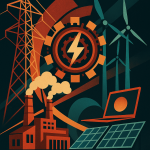
- China’s 15th Five-Year Plan targets ¥30 trillion RMB ($4.23 trillion USD) in operating revenue for its electronic information manufacturing sector by 2030, a doubling of revenue in five years from 2025.
- The plan signifies a shift from “scale leadership” to “systemic leadership,” focusing on quality, innovation, and technological supremacy, particularly driven by Artificial Intelligence (AI).
- Key strategic areas for innovation include Integrated Circuits, advanced computing, consumer and energy electronics, and enhanced R&D intensity to 3.5%.
- China aims to overcome computing bottlenecks like the “Memory Wall” and “Power Wall” through advancements in High-Bandwidth Memory (HBM), liquid cooling, and high-speed optical interconnects.
- Emerging growth directions include energy electronics (e.g., perovskite tandem cells), spatio-temporal information industry, AI hardware foundation, and digital integration of industry-specific electronics.

China just dropped a massive strategic blueprint for its electronic information manufacturing sector.
The Ministry of Industry and Information Technology (Gongye he Xinxi Hua Bu 工业和信息化部) and the National Development and Reform Commission (Guojia Fazhan he Gaige Weiyuanhui 国家发展改革委) jointly released the “15th Five-Year Plan for the Development of the Electronic Information Manufacturing Industry,” and it’s setting the tone for how China plans to dominate tech over the next decade.
Here’s the headline number: ¥30 trillion RMB ($4.23 trillion USD) in operating revenue by 2030.
To put that in perspective, that’s roughly the size of the entire UK economy—just for one sector of Chinese tech.
From “Scale Leadership” to “Systemic Leadership”
This isn’t just about growing bigger.
The plan represents a fundamental shift in China’s approach to the electronics industry.
Instead of competing purely on volume and cost, China is pivoting toward quality, innovation, and technological supremacy.
Experts point out that Artificial Intelligence (AI) is reshaping everything here.
According to industry analysts, AI is the primary theme driving this transition—moving the entire sector from “scale leadership” (winning through sheer production volume) toward “systemic leadership” (winning through superior technology and integration).
Think of it this way: China already makes more phones, computers, and TVs than anyone else on the planet.
Now they want to make the smartest ones.

TeamedUp Intelligence
China Tech Salary Benchmarks:
- Millions of Verified Salary Datapoints
- P25, Median & P75 Comp Bands
- Tier 1–3 Cities & Tech Roles
- Interactive Visual Data Explorer
- AI Agent & MCP / REST API Ready

The AI-Powered Electronics Revolution
The plan emphasizes several critical moves:
- Seizing AI opportunities by strengthening technological foundations across the supply chain
- Accelerating innovation in integrated circuits, advanced computing, consumer electronics, and energy electronics
- Pushing R&D intensity to 3.5% by 2030 (compared to current levels)
- Building world-class competitive enterprises that can compete globally
- Enhancing supply chain security to reduce dependence on foreign technology
The goal is nothing short of ambitious: a massive increase in computing power supply and widespread adoption of next-generation intelligent terminals.
This marks what the plan calls a new stage of intelligent, green, and integrated development for the entire sector.
China’s Dominance: The Numbers Don’t Lie
Let’s talk about where China stands right now.
According to Ao Li (Ao Li 敖立), Vice President of the China Academy of Information and Communications Technology (Zhongguo Xinxi Tongxun Yanjiuyuan 中国信息通信研究院):
“China’s electronic information manufacturing revenue and export share have ranked first among 41 industrial categories for 13 consecutive years.”
Translation: China is already the undisputed king of global electronics manufacturing.
Production volumes for mobile phones, microcomputers (Jisuanji 计算机), and color televisions (Caidian 彩电) have held the top global position for years.
But dominance in quantity isn’t enough anymore.
“Transforming scale advantages into systemic advantages—moving from ‘leading in quantity’ to ‘winning in quality’—is the major mission for the industry during the 15th Five-Year Plan period,” Ao Li explained.
The plan tackles this through four key dimensions:
- Foundation building (strengthening technological bases)
- Chain strengthening (securing supply chains)
- Innovation cultivation (fostering R&D capabilities)
- Sustainability (environmental and resource efficiency)

Find Top Talent on China's Leading Networks
- Post Across China's Job Sites from $299 / role
- Qualified Applicant Bundles
- One Central Candidate Hub
Your First Job Post Use Checkout Code 'Fresh20'
The Growth Trajectory: From ¥15 Trillion to ¥30 Trillion
Here’s where it gets really interesting.
According to Xiang Ligang (Xiang Ligang 项立刚), Director General of the Information Consumption Alliance (Zhongguancun Xinxi Xiaofei Lianmeng 中关村信息消费联盟), the numbers tell a compelling story:
- 14th Five-Year Plan (2021-2025): Annual average industry revenue of approximately ¥15 trillion RMB ($2.11 trillion USD)
- 2025 Target: ¥17 trillion RMB ($2.40 trillion USD)
- 2030 Target: ¥30 trillion RMB ($4.23 trillion USD)
That’s a doubling of revenue in just five years.
To contextualize: this growth rate far exceeds traditional industries.
It highlights China’s massive potential in high-technology sectors and demonstrates where the real economic dynamism is happening.

ExpatInvest China
Grow Your RMB in China:
- Invest Your RMB Locally
- Buy & Sell Online in CN¥
- No Lock-In Periods
- English Service & Data
- Start with Only ¥1,000
Five Strategic Areas for Full-Chain Innovation
- Integrated Circuits: Strengthening the foundation of all modern electronics.
- Electronic Components & Materials: Shifting from commodity products to specialized high-end technology.
- Intelligent Sensors: Developing essential hardware for AI and Internet of Things (IoT).
- Special Equipment: Manufacturing the advanced tools and instrumentation required for high-tech production.
- Photonic Industry: Advancing next-generation optical technologies.
To hit these ambitious targets, the plan prioritizes full-chain innovation across five critical areas:
-
Deep breakthroughs in Integrated Circuits
(The foundation of all modern electronics) -
High-end upgrades in electronic components and materials
(Moving from commodity to specialized tech) -
Iteration of Intelligent Sensors (Chuanganqi 传感器)
(Essential for AI and IoT applications) -
Breakthroughs in Special Equipment (Zhuanyong Shebei 专用设备) and instrumentation
(Manufacturing the tools to make the tech) -
Advancements at the frontier of the Photonic Industry
(Next-generation optical and photonic technologies)
The materials sector deserves special attention here.
According to Xiang Ligang, materials, energy, and information form what he calls a mutually supportive “Iron Triangle.”
Advanced materials—such as diamonds and perovskite compounds—have revolutionary significance for the information industry and AI advancement.
The plan strategically addresses both the broad direction of AI development and specific methods for material breakthroughs, reflecting a blend of virtual and physical innovation.

Resume Captain
Your AI Career Toolkit:
- AI Resume Optimization
- Custom Cover Letters
- LinkedIn Profile Boost
- Interview Question Prep
- Salary Negotiation Agent
Three Computing Bottlenecks Holding Back AI Hardware
According to Liang Linjun (Liang Linjun 梁林俊), an expert at the Institute of Industrialization and Informationization of the China Academy of Information and Communications Technology (CAICT), there are three critical bottlenecks restricting computing power:
-
The “Memory Wall”
(Data can’t move between CPU and memory fast enough) -
The “Power Wall”
(Heat and power consumption increase with chip density) -
Cluster interconnection bandwidth constraints
(Multiple chips can’t communicate fast enough with each other)
These bottlenecks are driving innovation in three critical areas:
- High-Bandwidth Memory (HBM) – faster memory connections
- Liquid cooling systems – managing heat in dense chips
- High-speed optical interconnects – faster communication between chips
These are core issues the plan aims to resolve.
Solving them could unlock massive performance gains for AI systems worldwide.
Four Emerging Growth Directions
Beyond the core innovation areas, the plan outlines four emerging directions to ensure sustained growth:
1. Energy Electronics: The Photovoltaic Frontier
The plan emphasizes high-efficiency crystalline silicon photovoltaic battery (Dianchi 电池) technology and next-generation innovations like perovskite tandem cells.
According to Liu Weijun (Liu Weijun 刘伟俊), co-founder of photonic technology firm G-Power (Guangyin Keji 光因科技):
“Perovskite tandem cells are seen as the future of photovoltaic technology. As bottlenecks in stability and large-area production are cleared, perovskite is expected to enter mass production within the next three to five years.”
This could revolutionize solar power efficiency.
The plan also pushes for expanded “Photovoltaics+” application scenarios—integrating solar tech into more products and systems.
2. Spatio-Temporal Information Industry
This emerging sector involves location-based and time-sensitive technologies—everything from satellite imaging to real-time positioning systems.
It’s becoming increasingly important for autonomous systems, agriculture, and disaster response.
3. Hardware Foundation for Artificial Intelligence
This is the big one.
The plan promotes iterative upgrading of AI smartphones, Personal Computers (PC), smart glasses, and audiovisual terminals to broaden their application scenarios.
Rather than creating new markets from scratch, the strategy is to build on existing industrial advantages where technical breakthroughs meet real-world application needs.
4. Digital and Intelligent Integration of Industry-Specific Electronics
This means taking electronic technologies and integrating them into specific industries—manufacturing, healthcare, agriculture, etc.
The goal is accelerating industry-wide digital transformation through specialized electronics.
The Logic Behind “Cultivating the New”
One of the smartest aspects of this plan is how it approaches innovation.
As Xiang Ligang concluded:
New growth points are not created from thin air, but grow from existing industrial advantages where technical breakthroughs meet real-world application.
This is fundamentally different from betting on entirely new industries that may or may not materialize.
Instead, China is doubling down on sectors where it already has massive scale and expertise—and then applying breakthrough technologies to unlock new possibilities.
It’s the difference between speculative innovation and strategic innovation.
What This Means for Global Tech
The 15th Five-Year Plan for electronic information manufacturing signals where China wants to lead next.
This isn’t just about hitting a revenue target of ¥30 trillion RMB ($4.23 trillion USD) by 2030.
It’s about establishing technological supremacy in the hardware that powers AI, renewable energy, and next-generation computing.
The plan demonstrates a shift from competing on volume and cost alone to competing on innovation, quality, and systemic integration.
For investors, founders, and tech leaders watching China’s move in electronic information manufacturing, the message is clear: the next decade will be shaped by breakthroughs in AI hardware, advanced materials, photonics, and energy electronics.
China’s 15th Five-Year Plan for electronic information manufacturing shows exactly where that race is heading.

References
- Electronic Information Manufacturing “15th Five-Year Plan” Released: 2030 Revenue to Sprint Toward 30 Trillion Yuan – Shanghai Securities News
- Official Portal – Ministry of Industry and Information Technology (MIIT)
- Industry Analysis and Trends – China Academy of Information and Communications Technology (CAICT)