Key Points
- CSRC Chairman Wu Qing (吴清) held an investor symposium in Beijing to gather opinions on promoting stable and healthy capital market development from diverse investor representatives.
- Investors noted that despite recent A-share market volatility due to factors like imported risks, the underlying policy and security logic of the capital market remains unchanged, suggesting short-term fluctuations won’t alter the long-term positive trend.
- Key investor recommendations included strengthening counter-cyclical adjustments, guiding medium-to-long-term funds, regulating quantitative trading and AI applications, and increasing legal costs for securities crimes.
- The CSRC emphasized that investors are the market’s foundation and outlined a four-pillar strategy focusing on market stability, enhancing listed company transparency, improving investor services, and continuously improving investor protection mechanisms.


Find Top Talent on China's Leading Networks
- Post Across China's Job Sites from $299 / role
- Qualified Applicant Bundles
- One Central Candidate Hub
Your First Job Post Use Checkout Code 'Fresh20'
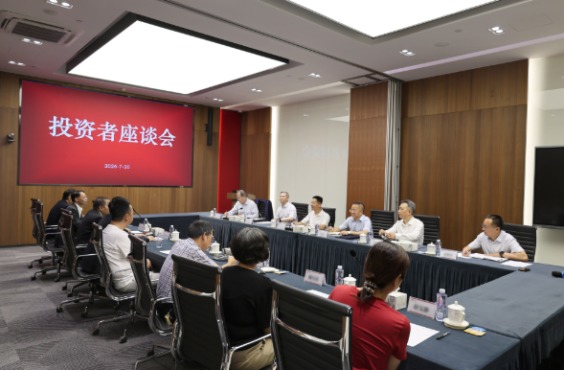
On the morning of July 20, Wu Qing (吴清), Secretary of the Party Committee and Chairman of the China Securities Regulatory Commission (Zhongguo Zhengquan Jiandu Guanli Weiyuanhui 中国证券监督管理委员会) (CSRC), conducted a research visit to a securities branch in Beijing.
During the visit, he chaired an investor symposium, engaging in face-to-face discussions with eight representatives from various investor backgrounds—including large, medium, and small-scale retail investors.
The primary objective of the meeting was to gather opinions and suggestions on promoting the stable and healthy development of the capital market.
Understanding the Current State of China’s A-Share Market
If you’re paying attention to Chinese capital markets, there’s a lot happening right now.
During the meeting, investor representatives shared perspectives based on their personal experiences in the stock market. They noted that since the implementation of the new “Nine National Articles” (Guo Jiu Tiao 国九条), China’s capital market has generally shown a trend of steady improvement.
But here’s the thing:
The A-share market has recently experienced significant volatility due to a combination of factors, such as imported risks from overseas.
However, the representatives emphasized something crucial:
The underlying policy logic, innovation logic, and security logic of the capital market since “September 26” have remained unchanged.
Their belief is straightforward—short-term fluctuations will not alter the long-term positive trend.
This messaging is important for investors trying to understand whether to panic or hold steady.

ExpatInvest China
Grow Your RMB in China:
- Invest Your RMB Locally
- Buy & Sell Online in CN¥
- No Lock-In Periods
- English Service & Data
- Start with Only ¥1,000

Key Investor Recommendations for Market Strength
- Need for stronger counter-cyclical adjustments between primary and secondary markets.
- Necessity of attracting stable, long-term capital to reduce market volatility.
- Demand for clearer regulations on AI and algorithmic trading impacts.
- Desire for higher penalties to deter illegal securities activities.
During the symposium, participants offered several actionable recommendations to bolster the market.
These weren’t just casual suggestions—they reflect what real investors are thinking about and worried about:
- Strengthening counter-cyclical adjustments between the primary and secondary markets.
- Implementing multiple measures to guide medium-to-long-term funds into the market.
- Regulating the development of quantitative trading and Artificial Intelligence (AI) applications in financial markets.
- Encouraging listed companies to increase dividend payouts to reward shareholders.
- Raising the legal costs and penalties for securities-related crimes and violations.
- Pushing forward the high-quality development of the capital market with full efforts.
What’s interesting here is the mix of recommendations—some focus on bringing in stable capital, others focus on managing new technologies like AI trading, and some focus on penalties and deterrents.
This suggests investors aren’t just worried about short-term market movements; they’re thinking about structural improvements to how the market operates.

Resume Captain
Your AI Career Toolkit:
- AI Resume Optimization
- Custom Cover Letters
- LinkedIn Profile Boost
- Interview Question Prep
- Salary Negotiation Agent
CSRC’s Strategic Response to Market Concerns
Chairman Wu Qing (吴清) didn’t just listen during the symposium—he laid out a clear vision for how the CSRC plans to respond.
His core message was direct:
“Investors are the foundation of the market and represent the most critical participant group in the capital market.”
Think about that for a second.
When a regulatory agency’s chairman is emphasizing the centrality of investors, it’s a signal that investor confidence and protection are top priorities right now.
Wu Qing (吴清) stated that the CSRC will adhere to an integrated approach to prevent risks, strengthen supervision, and promote high-quality development.
The CSRC’s Four-Pillar Strategy for Market Stability
The CSRC intends to focus on several core areas to strengthen the market:
- Maintaining the stable operation of the market at all costs.
- Improving the transparency and authenticity of listed companies to better reward investors.
- Urging industry institutions to operate in a standardized manner and improve investor service levels.
- Continuously improving long-term mechanisms for investor protection.
- Resolving to maintain an open, fair, and just market order.
The overarching goal, according to Wu Qing (吴清), is clear:
Ensure that investors can better share in the fruits of the high-quality development of the economy and the capital market.
This is about more than just preventing crashes or managing day-to-day volatility.
It’s about building a sustainable ecosystem where retail and institutional investors alike can participate confidently in China’s economic growth story.
What This Means for Chinese Tech Investors
For investors focused on Chinese tech and capital markets, this symposium signals a few important things:
First, the CSRC is actively listening to investor concerns and taking them seriously.
The fact that Wu Qing (吴清) personally chaired this meeting and spent time with eight different investor representatives shows that investor feedback is flowing directly to the top.
Second, there’s recognition that AI and quantitative trading need to be regulated, not banned outright.
The recommendation to “regulate the development” of these technologies suggests the CSRC understands they’re here to stay, but need guardrails.
Third, dividend payouts and listed company transparency are becoming policy priorities.
This could drive changes in how Chinese companies approach shareholder returns and financial reporting.
The Bigger Picture: Why This Matters Now
The timing of this symposium is worth noting.
China’s capital markets have been under pressure from multiple directions—domestic economic uncertainty, international trade tensions, and shifting investor sentiment.
By convening this meeting and publicly committing to investor protection and market stability, the CSRC is sending a signal to both domestic and international investors that the regulatory environment is stable and responsive.
Senior officials from relevant departments of the CSRC and the Beijing Securities Regulatory Bureau (Beijing Zhengjianju 北京证监局) also attended the symposium, underscoring the importance placed on these discussions.
For tech founders, investors, and marketers watching Chinese markets, this is a reminder that regulatory clarity and investor protection are becoming central to how the CSRC operates.
The conversation around AI regulation, quantitative trading, and market stability in China’s securities regulatory framework is only going to intensify.