Key Points
- Priorities for 2026: The NDRC (国家发展和改革委员会) signaled at the Dec 12–13, 2025 conference a shift to curbing “involution” (nei juan 内卷式) competition and cultivating new growth drivers.
- Scale up “AI+” (Ren Gong Zhi Neng 人工智能+): Policy will deepen AI+ integration across industries and push to close gaps in tech services (cloud, compute, enterprise AI infrastructure).
- Capacity and industry governance: Emphasis on capacity governance, developing future industries, and improving ecosystems for the low-altitude economy (Di Kong Jingji 低空经济) and the digital economy (Shuzi Jingji 数字经济).
- Market implications: Expect tighter oversight of wasteful, duplicative competition (favoring consolidation and quality) and stronger policy support/opportunities for firms in AI infrastructure, AI applications, and digital services.

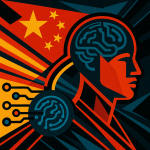
NDRC is signaling a clear pivot toward quality growth, focusing on curbing involution-style competition and scaling AI+ across the economy.
Key takeaway — NDRC priorities for 2026
The National Development and Reform Commission (Guojia Fazhan he Gaige Weiyuanhui 国家发展和改革委员会, NDRC) said at the national development and reform work conference (held December 12–13 in Beijing) that next year’s priorities will include curbing “involution-style” competition, cultivating new drivers of growth, and expanding the “AI+” (Ren Gong Zhi Neng 人工智能+) initiative.
This guidance points to a coordinated policy push for innovation-led growth rather than volume-driven rivalry.

Find Top Talent on China's Leading Networks
- Post Across China's Job Sites from $299 / role
- Qualified Applicant Bundles
- One Central Candidate Hub
Your First Job Post Use Checkout Code 'Fresh20'

What the meeting emphasized — clear policy threads
- Comprehensively addressing “involution-style” (nei juan 内卷式) competition to reduce wasteful, zero-sum rivalry and free up productive resources for innovation and value creation.
- Strengthening capacity governance in key industries and improving regulation of major infrastructure to better align supply with strategic demand.
- Vigorously cultivating and scaling up emerging industries and “future industries”, and developing several new emerging pillar sectors to underpin mid- and long-term growth.
- Deepening and expanding the “AI+” action plan to drive broader AI adoption across industries, while closing gaps in the technology services sector.
- Improving the industrial ecosystem for the low-altitude economy (Di Kong Jingji 低空经济), and pushing forward high-quality development of the digital economy (Shuzi Jingji 数字经济).

ExpatInvest China
Grow Your RMB in China:
- Invest Your RMB Locally
- Buy & Sell Online in CN¥
- No Lock-In Periods
- English Service & Data
- Start with Only ¥1,000
Why it matters — meaning for investors, founders, and operators
The NDRC’s guidance signals a coordinated policy push to shift China’s development focus from volume-driven competition toward higher-quality, innovation-led growth.
Emphasizing “AI+” integration and digital-economy development indicates continued state support for technology adoption across traditional and emerging sectors.
The call to correct “involution” suggests more attention on market structure, competition rules, and resource allocation to prevent inefficiencies and speculative behavior.

Resume Captain
Your AI Career Toolkit:
- AI Resume Optimization
- Custom Cover Letters
- LinkedIn Profile Boost
- Interview Question Prep
- Salary Negotiation Agent
Terms and names clarified — what the key labels mean
- National Development and Reform Commission (Guojia Fazhan he Gaige Weiyuanhui 国家发展和改革委员会, NDRC)
- Artificial Intelligence / “AI+” (Ren Gong Zhi Neng 人工智能+)
- Low-altitude economy (Di Kong Jingji 低空经济)
- Digital economy (Shuzi Jingji 数字经济)
Context and likely implications — practical signals to the market
Policy priorities set at national-level meetings typically translate into targeted regulatory actions, industrial guidance, and funding priorities over the following year.
For businesses and investors, this means:
- Companies aligned with AI infrastructure, AI applications, digital services, and low-altitude economy platforms may see stronger policy support and opportunities for pilot programs or funding.
- Regulators may tighten oversight of excessively competitive or duplicative business practices that contribute to “involution”, potentially favoring consolidation or standards that emphasize quality and sustainability.
- Efforts to “fill gaps” in the technology services sector could include incentives to build domestic capabilities in cloud, compute, and other tech services that support large-scale AI deployment.
Practical takeaways for each stakeholder
- Investors: Look for companies with defensible, long-term value creation and alignment to national priorities like AI+ and the digital economy.
- Founders & operators: Prioritize product-market fits that reduce wasteful competition and demonstrate productivity gains from technology adoption.
- Tech teams: Focus on building robust, scalable infrastructure and closing capability gaps in services that enable enterprise AI.
- Marketers: Position offerings around efficiency, quality, and regulatory compliance rather than one-upmanship in pricing or growth-at-all-costs tactics.
Bottom line
The NDRC’s directions at the conference reflect a policy balance: accelerate technology-led transformation—especially through “AI+” and the digital economy—while correcting market behavior that produces wasteful competition.
For stakeholders, this is a signal to prioritize long-term value creation, strategic capacity building, and deeper integration of AI and digital technologies into core business models.
Keep an eye on how the NDRC translates these priorities into concrete guidance and funding in 2026.



![Kweichow Moutai Talks Growth, Maotai 1935 Sales, and Global Plans: Key Takeaways from the 2024 Earnings Call [FreshFromChina]](https://freshfromchina.com/wp-content/uploads/2025/05/Kweichow_Moutai_Talks_Growth_Maotai_1935_Sales_and_Global_Plans_Key_Takeaways_from_the_2024_Earnings_Call_TeamedUpChina-150x150.png)