Key Points
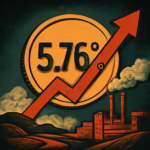
- Natural rubber prices reached a 9-year high, with Shanghai futures hitting ¥20,095 RMB ($2,813 USD) per ton, and spot prices up 26% year-to-date and 31% year-over-year.
- The surge is driven by multiple supply-side pressures, including severe flooding in Thailand’s rubber-producing regions and a multi-year low in China’s Qingdao Bonded Area inventory levels.
- A rapidly developing “Super El Niño” is expected to peak around November, threatening potential droughts in major Southeast Asian production areas and sustaining long-term supply constraints.
- The natural rubber supply chain struggles with inelasticity, as rubber trees take 6-8 years to mature, making quick supply responses to price increases impossible and leading to an aging tree population.
- Upstream producers like Hainan Rubber (Hainan Xiangjiao 海南橡胶) are benefiting, while downstream manufacturers are increasing prices (2-5% for tire companies) to mitigate rising raw material costs.

Natural rubber just hit a milestone that hasn’t happened in nearly a decade.
On September 30, Shanghai’s main rubber futures contract settled at ¥20,095 RMB ($2,813 USD) per ton—a jaw-dropping 5.54% spike in a single day.
This was the first time since March 2017 that the market broke through the ¥20,000 RMB ($2,800 USD) barrier.
And the momentum? It’s real. Spot market prices reflected an even wilder picture: ¥19,400 RMB ($2,716 USD) per ton, up 26% year-to-date and 31% compared to last year.
Hainan Rubber (Hainan Xiangjiao 海南橡胶), China’s biggest natural rubber player, saw its stock price hit the daily trading limit within five seconds of market open. It stayed locked there all day, closing at ¥6.37 RMB ($0.89 USD) per share.
What’s driving this surge?
The answer involves flooded Thai plantations, climate forecasts that would make your weather app nervous, and a supply chain that can’t easily bounce back.
—

TeamedUp Intelligence
China Tech Salary Benchmarks:
- Millions of Verified Salary Datapoints
- P25, Median & P75 Comp Bands
- Tier 1–3 Cities & Tech Roles
- Interactive Visual Data Explorer
- AI Agent & MCP / REST API Ready

Why Natural Rubber Prices Are Skyrocketing Right Now
- Thai Plantation Flooding: Heavy rains disrupting tapping operations.
- Inventory Depletion: Qingdao Bonded Area stocks at multi-year lows.
- Synthetic Costs: High crude oil prices raising the floor for alternatives.
- Climate Risk: “Super El Niño” threat to future Southeast Asian yields.
The rubber market isn’t moving on hype. Multiple institutions point to a real supply squeeze—one that’s being triggered by several converging factors.
Immediate Pressure: Flooding in Thailand
Thailand produces more natural rubber than anywhere else on the planet.
It’s the global anchor for rubber supply.
Here’s the problem: continuous heavy rains starting in mid-to-late September have directly disrupted tapping operations across Thailand’s northeastern rubber-producing regions.
When you can’t tap rubber trees, you can’t produce rubber.
During the first eight months of 2023, Thailand’s rubber exports were already down year-over-year. The rain pushed things worse.
Global Production Is Weakening
Data from the ANRPC (Association of Natural Rubber Producing Countries) tells the story:
- In July, member countries’ production jumped 9.24% month-over-month
- But it fell 2.11% year-over-year
- Vietnam’s production dropped significantly
- Thailand’s growth remained weak
On the import side, China—a massive rubber consumer—imported just 486,000 tons in August, down 6.7% year-over-year.
That’s the lowest level for August in six years.
Inventory levels in the Qingdao Bonded Area have hit multi-year lows, suggesting the market is genuinely tight.
Synthetic Rubber Can’t Fill the Gap
When natural rubber gets expensive, manufacturers often consider switching to synthetic alternatives.
Except there’s a problem: crude oil prices are high, which makes producing synthetic rubber more expensive.
This means natural rubber gets price support from an unexpected direction—synthetic rubber’s production costs have become a price floor.
The Climate Wildcard: Super El Niño
Here’s where the real long-term concern kicks in.
The National Climate Center (Guojia Qihou Zhongxin 国家气候中心) recently forecasted that El Niño is developing rapidly and expected to peak around November.
They’re predicting one of the strongest “Super El Niño” events on record.
What does that mean for rubber?
International markets are bracing for potential droughts across major Southeast Asian production areas. Lower yields would mean sustained supply constraints.
The Real Problem: Supply Can’t Respond Quickly
Here’s the structural issue analysts keep hammering on:
Rubber trees take 6 to 8 years just to reach tapping age.
They need 13 to 15 years to hit peak production.
This isn’t like wheat or corn where farmers can replant next season if prices spike.
Years of low prices in the previous cycle discouraged replanting. Southeast Asia’s rubber tree population is aging. Farmers have been shifting toward other crops like palm oil.
Translation: global natural rubber supply lacks elasticity.
When prices rise, supply can’t quickly scale up to meet demand or knock prices down.
—
Is This a Real Bull Market or Just Noise?
Investors are asking the obvious question: Is this spike sustainable?
Several institutions say yes—but it won’t be a vertical move.
Analysts describe the setup as a potential “slow bull” market rather than frenzied speculation.
Why the distinction matters: a slow bull is built on fundamental supply-demand improvements, not just emotion.
What’s Supporting Prices Right Now
Shenwan Hongyuan Futures (Shen Yin Wan Guo Qihuo 申银万国期货) laid out the case:
- Tapping in production areas continues to face rain disruptions
- Raw rubber prices in Thailand remain firm
- Demand has entered its traditional peak season
- Downstream operations are slowing slightly due to rising raw material costs
- El Niño concerns continue to pressure future supply expectations
Short-term outlook: rubber prices should remain strong.
The Spot Market Picture: “Tight Supply, High Prices, Weak Demand”
The timing matters here.
China’s National Day holiday meant many tire and rubber product companies shut down for maintenance during this period.
Trading volume quieted down.
Most dealers are consuming existing inventory rather than buying new stock at these elevated prices.
The result: a market characterized by tight supply, high prices, and weak demand.
This creates an unusual dynamic where prices are elevated, but traditional demand isn’t firing on all cylinders yet.
—

Find Top Talent on China's Leading Networks
- Post Across China's Job Sites from $299 / role
- Qualified Applicant Bundles
- One Central Candidate Hub
Your First Job Post Use Checkout Code 'Fresh20'
Who Wins and Who Loses: Impact Across the Supply Chain
Rising natural rubber prices don’t affect everyone equally.
The industrial chain has clear winners and losers.
The Winners: Upstream Resource Producers
Rubber producers and plantation operators benefit directly from higher prices.
Hainan Rubber (Hainan Xiangjiao 海南橡胶) is the marquee example.
It’s the only A-share listed company covering the entire natural rubber industrial chain—from planting and processing to trade.
According to company data, it manages 4.9 million mu (approximately 807,000 acres) of land globally.
Of that, 3.8 million mu (approximately 626,000 acres) are rubber plantations.
When prices rise, profitability on these operations improves directly.
The Pressure: Downstream Manufacturers
Tire companies and rubber product manufacturers face the opposite problem.
Natural rubber represents a significant chunk of their production costs.
The response has been swift: most domestic tire companies announced price increases for October ranging from 2% to 5%.
Notably, some manufacturers have raised prices twice since August alone.
Who Can Actually Handle It
Not all tire manufacturers are created equal when costs rise.
Leading tire companies have several levers they can pull:
- Pass cost increases to customers through price hikes
- Optimize product mix to improve margins
- Utilize overseas production capacity
- Use hedging strategies to lock in costs
Small and medium-sized tire enterprises? They’re vulnerable.
These companies typically have less pricing power with customers, weaker hedging capabilities, and less geographic flexibility.
They absorb more of the cost squeeze directly into their margins.
—

ExpatInvest China
Grow Your RMB in China:
- Invest Your RMB Locally
- Buy & Sell Online in CN¥
- No Lock-In Periods
- English Service & Data
- Start with Only ¥1,000
What This Means for Natural Rubber Markets Going Forward
Natural rubber just hit a 9-year high, and the structural conditions suggest prices could stay elevated for a while.
The El Niño forecast provides a potential medium-term tailwind for prices if it reduces Southeast Asian production as expected.
The aging rubber tree population and lack of quick supply response mean any supply shock will have outsized impact.
For investors, this creates a bifurcated opportunity: upstream producers like Hainan Rubber (Hainan Xiangjiao 海南橡胶) gain from higher prices, while downstream manufacturers face margin pressure unless they can pass costs along.
For the broader market, natural rubber prices remain a bellwether for commodity inflation and Southeast Asian economic health—especially as climate events like El Niño become more significant supply variables.
Keep watching natural rubber futures as a real-time indicator of global supply chain stress and commodity inflation trends.
—

Resume Captain
Your AI Career Toolkit:
- AI Resume Optimization
- Custom Cover Letters
- LinkedIn Profile Boost
- Interview Question Prep
- Salary Negotiation Agent