Key Points
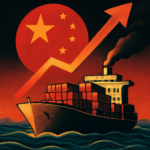
- The “World Cup Curse” for the A-share market is largely a statistical coincidence, with the Shanghai Composite Index falling in five out of eight World Cup periods since 1994, but other indices show no consistent downward trend.
- Brokerages agree that the World Cup typically leads to reduced trading volume and cooling investor sentiment, rather than significant index drops, particularly in the first week of the tournament.
- The perceived market weakness often coincides with mid-year liquidity observation, sparse performance data, shifting policy expectations, and the semi-annual earnings report window, not solely the sporting event.
- The 2026 World Cup offers genuine investment opportunities in sectors like Food and Beverage (Shipin Yinliao 食品饮料), Hotel and Catering (Jiudian Canyin 酒店餐饮), and Digital Media (Shuzi Meiti 数字媒體) due to shifted consumption patterns, though these themes are often short-lived (“buy the rumor, sell the fact”).
- Investors should prioritize mid-term industrial trends (e.g., AI computing, Semiconductors Ban Daoti 半导体) over short-term “World Cup themes,” as the tournament reflects short-term sentiment but does not alter fundamental market direction.
- Food and Beverage: Increased demand for evening snacks and beverages (beer, soft drinks).
- Hotel and Catering: Viewing parties and increase in related tourism travel.
- Digital Media: Higher traffic for broadcasting platforms and sports news apps.
- E-commerce: Spike in late-night food delivery and sports merchandise sales.
- Sports Tourism: Growth in travel bookings for live viewing or fan zones.

The 2026 FIFA World Cup is coming to North America, and the A-share market is already buzzing about something called the “World Cup Curse.”
Here’s what we’re dealing with: June 11 to July 19, 2026 marks the biggest World Cup ever—48 teams, 104 matches, 39 days straight.
But here’s the thing that matters for Chinese investors: most games kick off during Beijing morning hours, which means the entire viewing pattern flips compared to previous tournaments.
We dug into what major Chinese brokerages are actually saying about this, and the consensus is pretty clear—the “curse” isn’t what you think it is.
So What Exactly Is This “World Cup Curse”?
The historical pattern looks sketchy at first glance.
Tianfeng Securities (Tianfeng Zhengquan 天风证券) pulled the data: since 1994, the Shanghai Composite Index fell in five out of eight World Cup periods.
That’s a 62.5% failure rate.
2018 was particularly brutal for the market during the tournament.
Zheshang Securities (Zheshang Zhengquan 浙商证券) confirmed similar numbers—the Shanghai Composite Index fell five times and rose three times across eight World Cups between 1994 and 2022.
But here’s where it gets interesting…
That pattern completely disappears when you look at other indices.
The Wind All-A Index shows gains and losses split almost equally.
Global indices like the S&P 500 and Nikkei 225 show zero consistent downward trend during World Cups.
So what’s really happening?
Huafu Securities (Huafu Zhengquan 华福证券) nailed it: this looks more like statistical coincidence than market law.
The weakness during World Cups probably overlaps with actual calendar effects and market cycles, not the sporting event itself.
For investors, this means treating the World Cup as a short-term sentiment disruptor makes sense.
Using it as your primary trading signal?
That’s where you run into problems.

Find Top Talent on China's Leading Networks
- Post Across China's Job Sites from $299 / role
- Qualified Applicant Bundles
- One Central Candidate Hub
Your First Job Post Use Checkout Code 'Fresh20'

What Actually Changes During the World Cup: Trading Volume, Not Just Prices
Here’s what brokerages agree on: something definitely shifts, but it’s not always what you’d expect.
The real story is about trading volume, not necessarily the index itself.
Zheshang Securities (Zheshang Zhengquan 浙商证券) makes the case that shrinking trading volume and cooling investor sentiment are way more characteristic than actual index drops.
Caitong Securities (Caitong Zhengquan 财通证券) studied the past five World Cups and found a clear pattern:
- Week one: A-share market trends weak with average losses around 3%
- Final week: Market rebounds roughly 3% as tournament hype settles
Total market turnover contracts at the start, then recovers as the tournament winds down.
This makes sense when you think about it.
A major global sporting event pulls attention away from financial markets—that’s just human nature.
Add in the timing issue: games in early morning Beijing time means some investors lose sleep and stay away from trading.
But there’s something bigger happening here that nobody talks about…

ExpatInvest China
Grow Your RMB in China:
- Invest Your RMB Locally
- Buy & Sell Online in CN¥
- No Lock-In Periods
- English Service & Data
- Start with Only ¥1,000
The Real Culprit: Mid-Year Liquidity and Earnings Season Timing
The World Cup hits in June and July—which is exactly when the A-share market enters its mid-year liquidity observation phase.
This is crucial and often overlooked:
- Performance data is sparse
- Policy expectations shift
- Risk appetite changes
- Semi-annual earnings reports window opens
All of that happens at the same time as the World Cup.
So when the market stumbles, it’s easy to blame football.
The truth?
Multiple factors converge.
The World Cup isn’t moving the market—it’s just sharing the stage with more fundamental forces.

Resume Captain
Your AI Career Toolkit:
- AI Resume Optimization
- Custom Cover Letters
- LinkedIn Profile Boost
- Interview Question Prep
- Salary Negotiation Agent
But Wait—There Are Some Real Investment Opportunities Here
The 2026 World Cup is genuinely different from previous tournaments, and brokerages see actual angles.
Guosen Securities (Guosen Zhengquan 国信证券) highlights why: 48 teams, 104 matches, 39 days means the event’s energy gets released gradually instead of all at once.
The time difference changes domestic consumption patterns.
Here’s what brokerages expect to see increased demand for:
- Evening snacks (shifted consumption timing)
- Hotel rooms (viewing parties, tourism)
- Food delivery (late-night/early-morning orders)
- Morning coffee and tea drinks (early matches mean early caffeine)
- Sports tourism (related travel and experiences)
The sectors getting periodic attention include:
- Food and Beverage (Shipin Yinliao 食品饮料)
- Hotel and Catering (Jiudian Canyin 酒店餐饮)
- Digital Media (Shuzi Meiti 数字媒体)
- Internet E-commerce (Hulianwang Dianshang 互联网电商)
- Sports-related tourism
Huafu Securities (Huafu Zhengquan 华福证券) reviewed the past six World Cups since 2002 and found something interesting: some industries get a “pre-game run-up” followed by a “mid-game correction.”
Finance and consumption sectors sometimes outperform during tournaments.
Manufacturing and construction show relative strength in certain cycles.
But here’s the warning:
World Cup themes don’t last.
Zheshang Securities (Zheshang Zhengquan 浙商证券) cited the 2022 Qatar World Cup: sports-related indices rose slightly two weeks before, then retreated within days.
This is textbook “buy the rumor, sell the fact” trading.
One Myth Worth Busting: This Isn’t a Defensive Play
A lot of investors assume the World Cup window means shift to defensive stocks.
That’s not necessarily true.
Tianfeng Securities (Tianfeng Zhengquan 天风证券) points out that while consumption and media themes do see periodic spikes, the period doesn’t necessarily favor high-dividend defensive stocks.
In some years, small-cap growth and high-volatility assets actually outperformed dividend sectors during the tournament.
Here’s why this matters right now:
The strongest structural leads in A-shares currently come from:
- AI computing
- Semiconductors (Ban Daoti 半导体)
- Robotics (Jiqiren 机器人)
- Hardware equipment
If you shift to defensive just because of the World Cup, you might miss primary industrial themes.
The tournament might divert short-term attention, but it’s not going to change the mid-term valuation of high-growth industrial chains.
The Bottom Line: It’s About Market Context, Not the Event
Here’s what we’ve learned from brokerages weighing in:
The World Cup works as a mirror for short-term sentiment, not a hand that moves the market.
If the market is already facing liquidity contraction or weak earnings growth, the World Cup amplifies that weakness.
If market themes are clear and capital is flowing in?
The tournament won’t pose much threat.
This explains why the “curse” works some years and completely fails in others.
Investors should split their thinking into two categories:
- Short-term pulses: World Cup consumption themes (best played by watching pre-game expectations)
- Mid-term trends: Industrial growth driven by earnings, orders, and policy
The 2026 World Cup will absolutely bring new consumption scenarios and traffic patterns.
But the A-share market won’t change its fundamental direction because of football.
Whether the index weakens or trading volume shrinks, everything eventually returns to the market’s own cycle and primary logic.
That’s the real story behind the World Cup Curse—and why smart investors focus on what matters.